Is Modern Constitutionalism Failing? Prof. Simón Yarza on AI, Lawfare, and Human Dignity
2025. December 01.

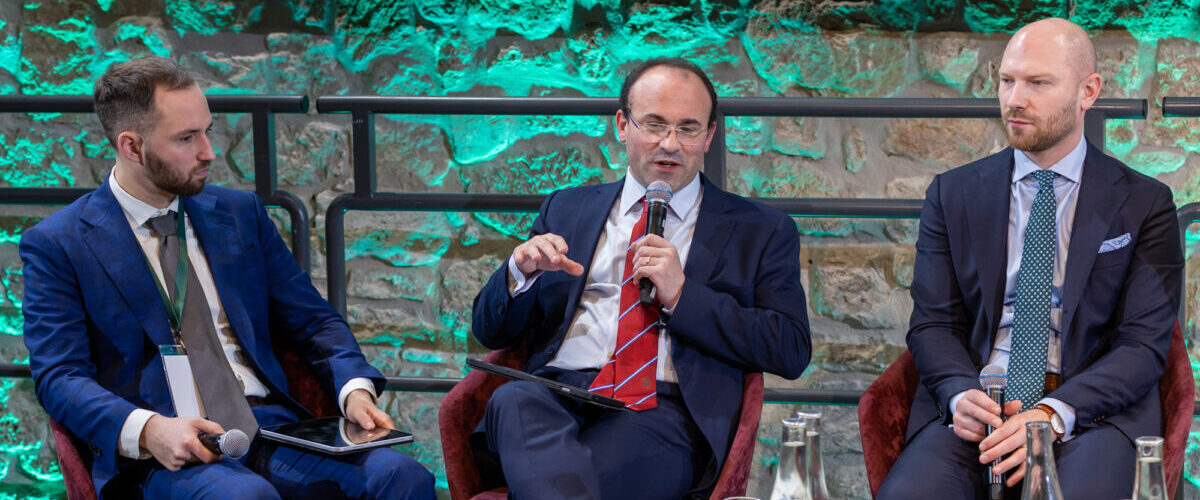
Fernando Simón-Yarza is a Spanish professor of constitutional law at the University of Navarra, and was one of the distinguished speakers at Axioma’s What It Means to Be Human? conference, organized in partnership with Pázmány Péter Catholic University on November 21, 2025. In this one-on-one interview with Domonkos Pulay from the Axioma Center, Prof. Simón Yarza reflects on human dignity, natural law, and the challenges posed by lawfare and emerging technologies, raising a pressing and increasingly relevant question: can modern constitutionalism still protect the human person in an AI-driven world?
You flew all the way from Spain to attend Axioma Center’s conference titled What It Means to Be Human? If you would have to define it in your own words, as a professor of constitutional law, as an academic, what would you say: what is a human?
There are many ways to approach the question, but to put it in very simple words — not as a lawyer, but as an academic more broadly — I would say a human being is a rational being who is able to love and seek God. That’s the deepest dimension of the human being: the possibility of loving. And I understand love not as a passion, but as an act of the will by which you transcend yourself and reach reality in itself, by which you can unite yourself with the external world and with what is most worthy in that world. And you can even go beyond that and reach God through love. I’d say that’s the deepest dimension of a human being.
And if I have to define the human being as a lawyer, as a legal scholar, I will say that it is a person, the only being that can possess things and be accountable for what he does. Both accountability (liability) and possession, I think, are defining characteristics of a human being. The human being has a binding connection with reality by which he can possess things and be accountable to others, which means that he lives on the horizon or in the dimension of justice. That would be the legal capability, or the juridical capability, of the human being.
The term “human dignity” was quite often mentioned in today’s conference. In your view, is human dignity something that the state grants, or is it something that the state is obligated to recognize because it precedes political authority?
Human dignity is intimately connected with human responsibility and freedom, with the fact that the human being lives in the dimension of justice. It’s definitely something that the state is bound to recognize. The state may or may not recognize it; nonetheless, it has the obligation to recognize it.
Again, from a legal standpoint, how can the concept of imago Dei, the idea that human beings were created with an inherent worth, inform constitutional debates without turning this into a religious issue or a religious imposition?
It’s very difficult to detach that concept from the religious sphere. The very idea of imago Dei points toward God. Human natural religiosity is present in different religions, and it is opposed to antireligious positions, which are definitely less reasonable. Thus, religion is far from being opposed to reason.
There is certainly a dimension of religion that is revealed. But there is also a dimension of religion that is strictly rational and natural. There is even a field of theology that overlaps with philosophy, namely, the so-called rational or natural theology (Theodicy). I think that we should accept a certain dimension of religiosity as natural and that even the state should endorse that natural religiosity. In fact, we can see many expressions of that religiosity in some states that are otherwise perfectly respectful and tolerant of different worldviews.
Thus, I wouldn’t detach the concept of human dignity or imago Dei from religion. This does not preclude being open and tolerant with different worldviews. But ultimately, I think that our constitutions should recognize certain natural religious truths through statements that are both open and respectful. Far from showing any disrespect, the recognition of God, or of the very idea of the human being as imago Dei, would be a step forward towards more respect for the most vulnerable human beings.
Personally, I’m a Catholic. And I think that the Catholic truth has a universal claim of validity. However, natural religiosity represents a common ground of different creeds. What is certainly not natural is the sort of agnosticism or atheism implicitly assumed and increasingly promoted by much Western legislation. I think that the view that denies any recognition of God is wrong in rational, moral, and juridical terms and is less universal.
We are increasingly seeing lawfare being used in cultural and ethical disputes. Where do you think legal systems risk overreaching in ways that undermine the dignity of the vulnerable person, or even the dignity of the human person?
The list is huge. There are many challenges in our legal systems, and there are, of course, agendas fighting against human dignity. In the field of human life, the idea of a right to abortion, of a right to kill a human being, is terrible. Additionally, we have to make it clear that it goes against the very wording of the most basic human rights texts. For example, if you go to Article 6 of the Universal Declaration of Human Rights, the Spanish version (which was one of the six original languages of the Declaration) says: “Every human being has the right, everywhere, to recognition of his or her legal personality.” Considering that this norm is a criterion of interpretation of the right to life and of other human rights, we have a knockout argument against abortion even in positivistic terms, in terms of what we have agreed on as States. For example, there should be no way to accept a liberal law on abortion under the Spanish Constitution if we were willing to make a simple and fair reading of the documents. A sensible reading of the text of the Universal Declaration of Human Rights, which is a criterion for interpreting our Constitution, is sufficient.
In spite of that, the liberal agenda has declared war against life and against the human being. And we have to be very clear about that. And that’s what is polarizing the world. Certain people with very good sense have said: “No more! No, I cannot accept this ideology. No compromise, zero compromise.” This ideology is a black hole. And now many people are willing to vote for strong leaders, sometimes despite their supposed populism, because those leaders are promising to fight tooth and nail rather than accept this black hole. Honestly, I think that it is the liberal agenda that has pushed the situation to a point that is unsustainable. Pope Benedict XVI even talked about the creed of the Antichrist. These are very strong words, but I think it’s true.
My next question is connected to that. Can modern constitutional democracies maintain a coherent vision of the human person if they cut themselves off from natural law, from transcendence, or is this fragmentation just completely unavoidable?
I think it’s unavoidable. Without some sort of recognition of religion and of the limits of humanity, without religious humility, we will not be able to be respectful of human dignity.
Finally, we’re living in an AI-driven world. We even hear terms like AI-driven decision-making. In a world like that, how should constitutional law address these shifting lines of responsibility, especially when technology deeply affects our daily lives, our lives as humans, our dignity, and family structures?
Law is not just about texts, but it is ultimately grounded in a concrete order of things, in factual realities that shape an order. Unfortunately, more and more, the texts are becoming sometimes even obsolete. Life goes very fast, and the factual elements of our order are increasingly unstable.
In his book The Nomos of the Earth, Carl Schmitt made very interesting reflections on the concrete order as the basis of law. In our days, artificial intelligence is shaping the concrete order upon which law operates. It is important to understand that constitutional texts are not the primary governing instance of that order. I fear that the truth is the opposite: technologies are shaping (or producing) our constitutional order (or disorder). For example, now we are finding many difficulties to protect privacy, due to the very nature of cyberspace. Most attacks on the honor of persons go unpunished on the Internet. In the world of artificial intelligence, I fear that the problems and difficulties to rationally manage order and prevent disorder will multiply.
I fear that positive law is sometimes even incapable of giving feasible and stable answers to many of our problems. It’s a very difficult question that would require much more nuance, but artificial intelligence is deeply affecting the concrete order in which we live.
More essays
Open Letter from Twenty-One Pro-Life Organizations to Dr. Zsolt Hegedűs, Hungary’s Minister of Health
Subject: Abortion Pill, Fetal Heartbeat Regulation – Pro-Life Organizations Excluded from Consultation Dear Minister, We have learned that today the Ministry of Health held a consultation regarding...

Rising antisemitic violence in western Europe: lessons and warnings for Hungary
Last Wednesday, London’s Jewish community was rocked once again by an appalling instance of extreme antisemitic violence. Essa Suleiman, a 45-year-old British citizen of Somali...
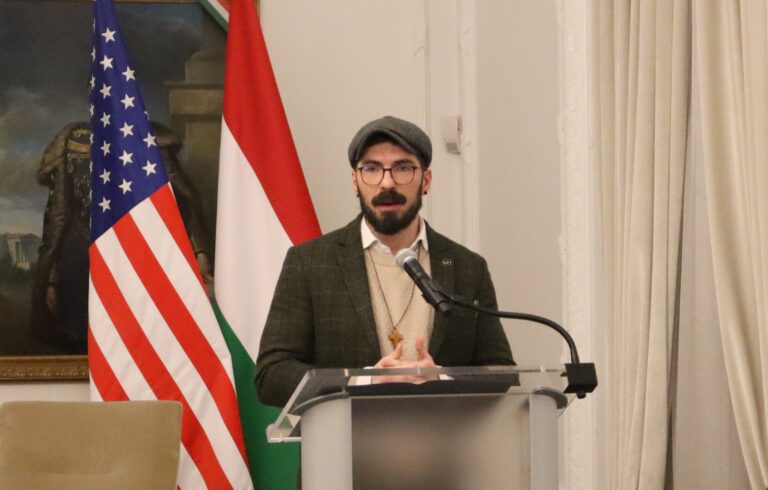
Remarks by Senior Researcher Wael Taji Miller “What the Crisis of Migration Means for Families and Nations”
We are pleased to share the transcript of a speech delivered at the Hungarian Embassy in Washington, DC, where two of our latest white papers...