Description
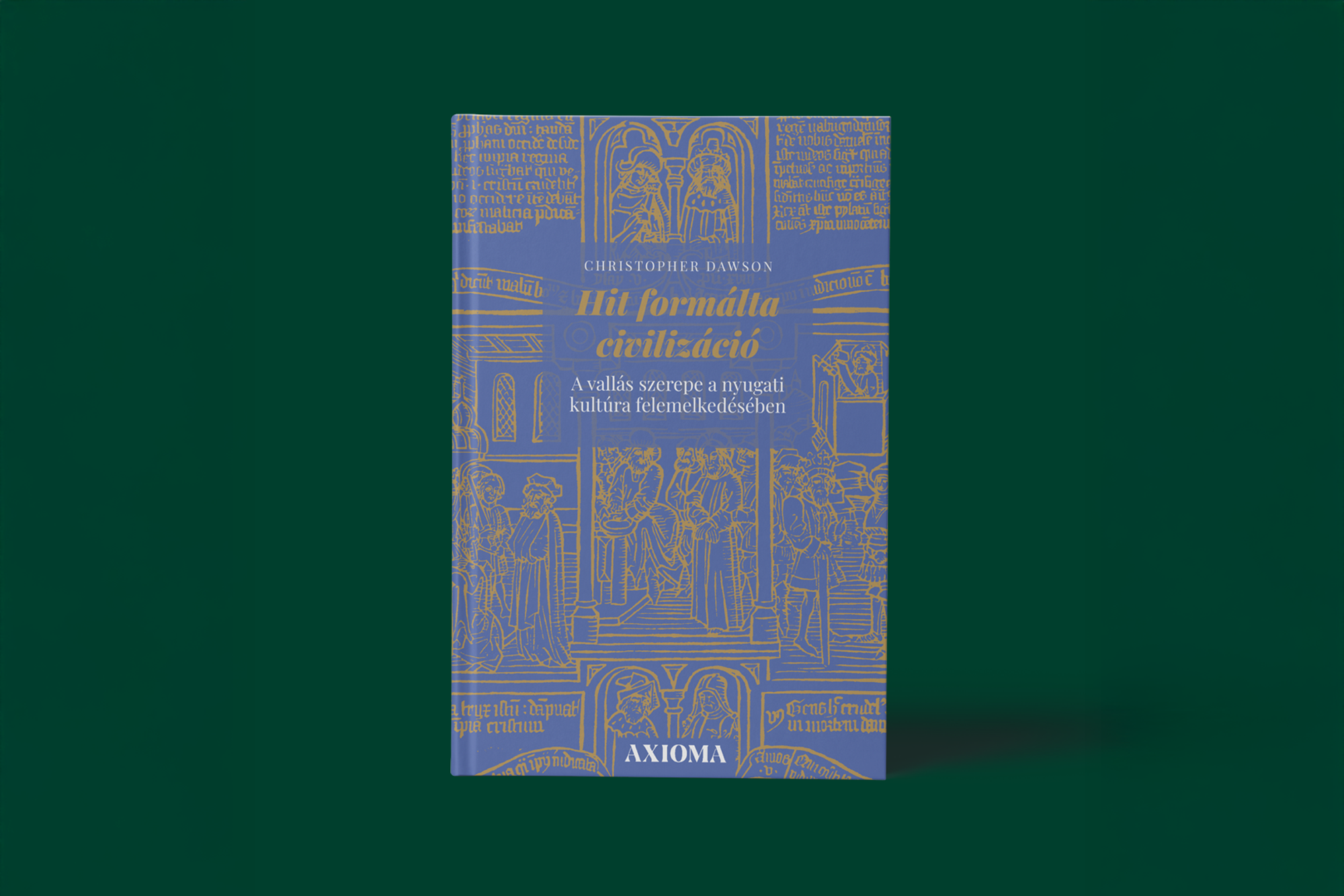
This is the Hungarian edition of Chrisopher Dawson’s Religion and the Rise of Western Culture.
Dawson’s work is not merely a historical overview, but a captivating intellectual journey in which he reveals how faith and culture, religion and civilization, became intertwined over the centuries of the Middle Ages. According to Dawson, the missionary nature of Western culture explains the restlessness of the modern West—the inner tension that today manifests as opposition to religion. Yet modern Europe was born precisely from the matrix created by Christianity.
It is therefore time to view the “dark” centuries of the so-called “transitional ages” with new eyes: this is our past; it is where we come from. Had it not been as it was, we would not be in a position to rebel against it today. A Christian-dominated European society created a reality with a unique dynamic: it sought to reconcile the traditions of a warlike, heroism- and aggression-based secular power with the traditions of a peace-building Christian society grounded in asceticism and self-denial. Dawson’s work invites the reader to recognize that the crisis of the West does not lie in its roots—but in the fact that it has forgotten them.
ABOUT THE AUTHOR:
Christopher Dawson (1889–1970): British historian, cultural philosopher, and sociologist who was one of the most significant Catholic thinkers of the 20th century. His first major work, The Age of the Gods (1928), examined the relationship between religion and culture in prehistoric and ancient times. In the late 1940s, his Gifford Lectures at the University of Edinburgh gave rise to Religion and Culture (1948) and, subsequently, the present volume, Religion and the Rise of Western Culture (1950), both of which analyze the central role of Christianity in shaping Western civilization.
Although his deeply Catholic views sometimes placed him outside the mainstream of British academic circles, Dawson was elected a Fellow of the British Academy in 1943 and served as Professor and Chair of Roman Catholic Studies at Harvard University from 1958 to 1962. Until the end of his life, he maintained a steadfast conviction in the importance of spirituality, tradition, and religious heritage.