Description
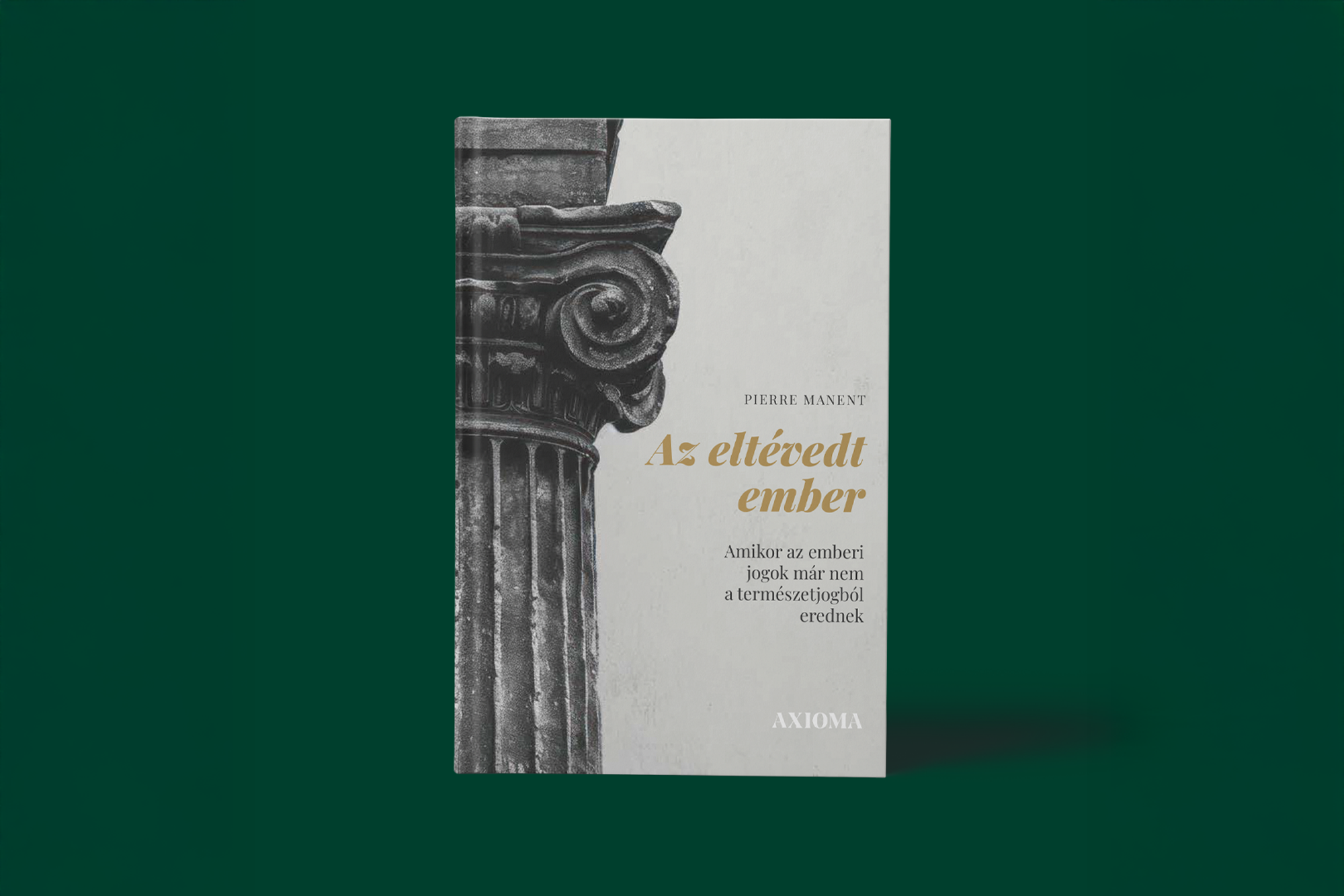
The Hungarian eidtion of Pierre Manent’s work, La loi naturelle et les droits de l’homme (or Natural Law and Human Rights) offers reflections on the central questions of the Western political tradition, and the reader now holds its first Hungarian translation.
In this book, Manent examines the ongoing displacement of natural law by the modern concept of human rights. He argues that the modern era emphasizes individual rights, which have replaced natural law and objective moral norms, leading to what he calls a “humanitarian civic religion.”
Individuals live without external constraints, yet they lack the internal guidance needed to act responsibly or to understand the common good. The author contends that this “freedom” betrays the essence of human nature, as individuals are governed by their passions rather than guided by reason and virtue. For this reason, human rights must be re-embedded within the framework of natural law, which, according to Manent, is defined by virtues such as courage, prudence, temperance, and justice. His book helps readers understand how modern man has lost his moral compass—and how he might find it again.
ABOUT THE AUTHOR:
Pierre Manent (1949–) is a contemporary French philosopher and political scientist, and a leading figure in the study of modern political thought as well as one of the most influential voices in today’s French intellectual life. Regardless of his value-oriented religious and political views—being a Catholic yet a liberal democrat—he consistently identifies as right-leaning. His research focuses on the relationship between democracy, liberalism, and the Western political tradition, with particular attention to the cultural and religious dimensions of modern societies.
Many of his works have had a significant impact on political philosophy and the interpretation of European politics, while also reinterpreting the intellectual heritage of both classical thinkers—such as Benjamin Constant, François Guizot, and Alexis de Tocqueville—and contemporary authors. Manent’s name may also be familiar to Hungarian readers, as several of his works on intellectual history have been published in Hungarian translation.