The Axiom of Online Child Protection
We work for a civilization of love, where children are protected from harmful content. This is why we published the Axioma Center’s first white paper.

Online pornography has ushered in an era in which the amount, extreme nature, and unhindered availability of sexually explicit content is unprecedented in human history. An unprecedented number of people – including many children – are active porn consumers. Hungary is no exception to this phenomenon. The Hungarian National Media and Infocommunications Authority (NMHH) examined the ten most popular pornographic websites in Hungary between May 16 and June 16, 2023. The research showed that 50% of Hungarian men and 20% of Hungarian women consume sexual content on these ten sites alone. Around 1.7 million users visit these sites each week. This figure is higher than the number of visitors to the popular streaming service, Netflix, and not far behind the traffic to the biggest Hungarian news portals 24.hu and Index.
Pornography is a problem that deeply affects Hungarian society.
The rise of smart devices means that most minors are exposed to pornographic content at an early age: between ages 11 and 13. A U.S. survey found that 84% of boys and 57% of girls aged 14 to 18 have viewed online pornography. These materials are increasingly consumed by children, a significant proportion of whom are exposed to such content involuntarily. Article XVI of the Fundamental Law of Hungary states that every child has the right to protection and care that is adequate for his or her proper physical, mental, and moral development.
Online pornography endangers the physical, mental, and moral development of a child and infringes on his or her right to protection and care, yet it is legally available in Hungary.
The proliferation of online pornography in the Western world is the result of philosophical, political, cultural, technological, and economic processes. Mass culture has become so saturated with sexual stimuli that popular culture has been desensitized to soft-core porn. This has led to the predominance of explicit and otherwise extreme content in the online space. The pornography industry is a multi-billion-dollar business that contributes to human trafficking, sexualises children, objectifies women, distorts sexuality, causes public health problems, and destroys families. Pornography directly and negatively impacts the health of its consumers.
It is also addictive:
it causes neurological changes in the human brain that are similar to drug addiction.
Recently, medical scientists have uncovered new correlations between online pornography use and behavioural changes. Regular porn consumers need to consume more and more extreme content to achieve the same level of arousal. This encourages men to become sexually aggressive and, over time, leads to erectile dysfunction. Pornography consumption also negatively affects women, causing self-esteem problems and sexual confusion. People who use online pornography can develop unrealistic expectations of their partners, which can lead to lasting and deep frustration, a dysfunctional sex life, and the breakdown of relationships and marriages. For people who are looking for partners, online pornography use can cause loneliness and anxiety and undermine their desire to take the initiative and seek out a real relationship.
Parents are largely unaware of the dangers of online pornography, and in the absence of effective legal solutions, children are almost defenceless against the predations of explicit material online.
In order to protect the common good, the state should view the fight against pornography as a fight to create a safe moral environment for children.
More research
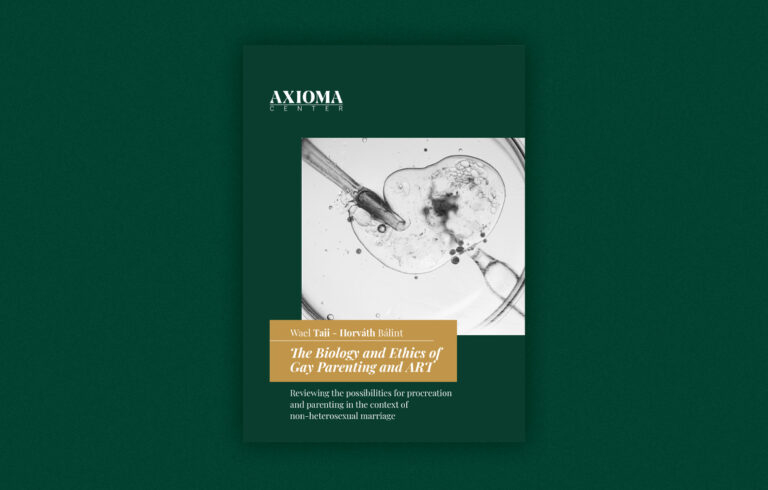
The Biology and Ethics of Gay Parenting and ART
What does the legalization of same-sex marriage require from lawmakers once parental rights are extended beyond heterosexual couples? This research paper examines the psychological, biological, legal, and ethical implications of same-sex parenting, with particular attention to adoption and assisted reproductive technologies.

Migration and Ethics – The Axioms of a Christian Migration Policy
How should historically Christian nations respond to the challenges of mass migration in an increasingly unstable and interconnected world? This white paper offers analysis guided by Christian principles and practical, ethically grounded solutions that uphold human dignity, the common good, and thriving communities.
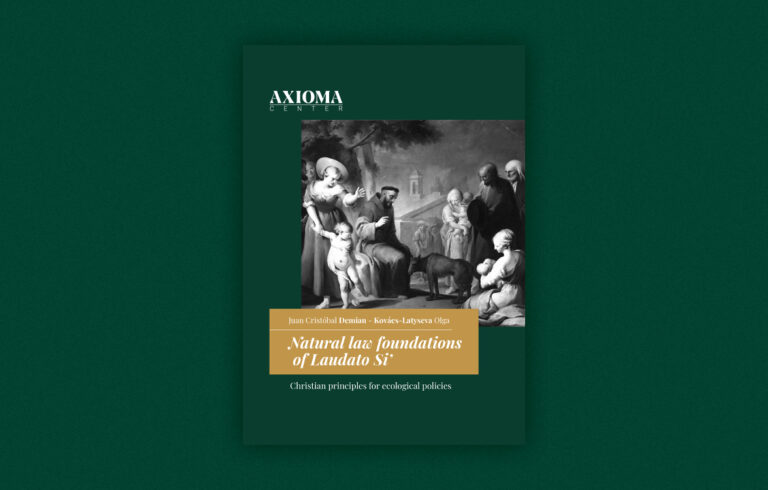
Natural Law Foundations of Laudato Si’ – Christian Principles for Ecological Policies
How should Christians care for creation without losing their theological foundations? This research paper reclaims Laudato Si’ through natural law, imago Dei, and Christian stewardship, offering a faithful alternative to both ecological reductionism and ideological environmentalism.