The Biology and Ethics of Gay Parenting and ART
What does the legalization of same-sex marriage require from lawmakers once parental rights are extended beyond heterosexual couples? This research paper examines the psychological, biological, legal, and ethical implications of same-sex parenting, with particular attention to adoption and assisted reproductive technologies.

The legalization of same-sex marriage has brought with it a significant expansion of parental and familial rights, extending to same-sex couples legal possibilities that were previously reserved for heterosexual marriage. Among the most consequential of these are the rights to produce, rear, and provide for children.
This research examines the broader implications of these changes, asking what lawmakers, courts, and policymakers effectively endorse when marriage is legally redefined and parental rights are extended accordingly.
The paper offers a comprehensive review of the scientific literature on same-sex parenting, drawing on psychological, biological, legal, and ethical research. Particular attention is given to four principal pathways through which same-sex couples may acquire children: adoption and three forms of assisted reproductive technologies (ART). By analyzing these methods separately,
the study highlights the distinct ethical and legal questions they raise, especially regarding the child’s relationship to biological parenthood, bodily integrity, and long-term welfare.
Although the authors are informed by a Christian ethical framework, the research deliberately adopts an unbiased and evidence-based approach. Rather than advancing theological claims, the paper evaluates empirical findings and legal structures to clarify the real-world consequences of contemporary family policy decisions. Its aim is to provide legislators, policymakers, and the wider public with a clearer understanding of how redefining marriage and parenthood reshapes the legal, ethical, and biological foundations of family life.
More research
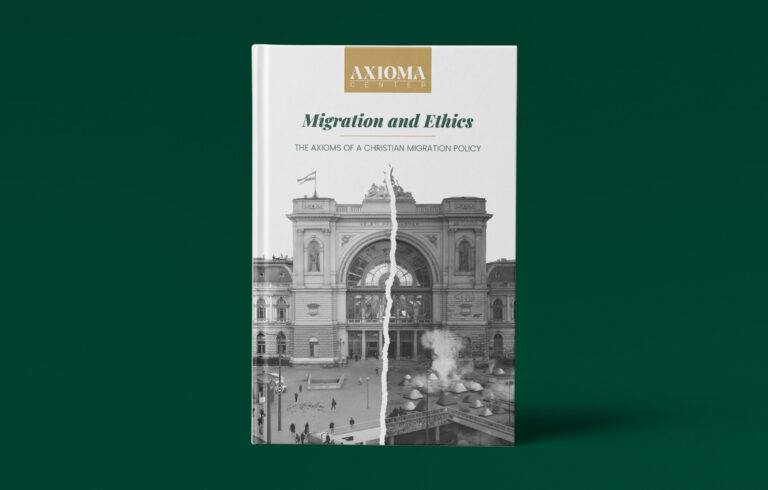
Migration and Ethics – The Axioms of a Christian Migration Policy
How should historically Christian nations respond to the challenges of mass migration in an increasingly unstable and interconnected world? This white paper offers analysis guided by Christian principles and practical, ethically grounded solutions that uphold human dignity, the common good, and thriving communities.
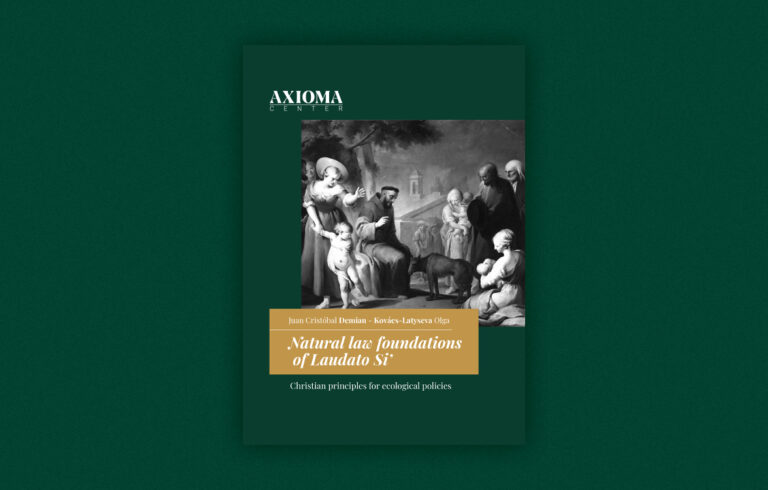
Natural Law Foundations of Laudato Si’ – Christian Principles for Ecological Policies
How should Christians care for creation without losing their theological foundations? This research paper reclaims Laudato Si’ through natural law, imago Dei, and Christian stewardship, offering a faithful alternative to both ecological reductionism and ideological environmentalism.
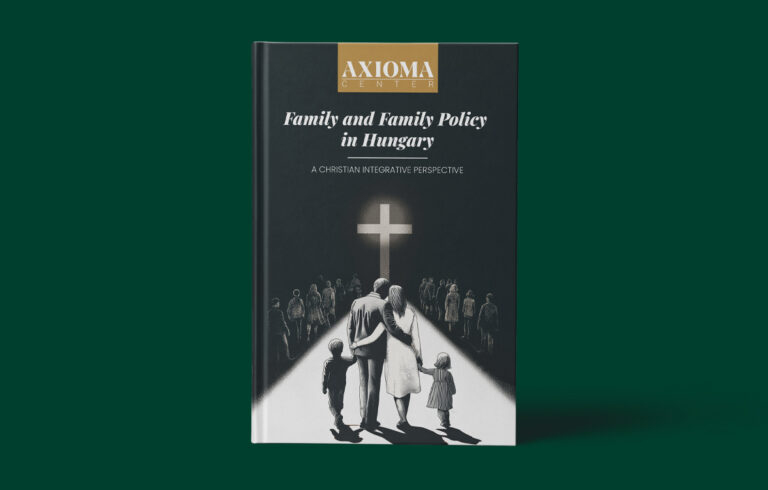
Family and Family Policy in Hungary – A Christian Integrative Perspective
The aim of our white paper on Hungarian families and family policy is to grasp the theoretical foundations of a Christian integrative family policy, while also ensuring their applicability in practice.