The Axiom of Protecting Human Dignity
Our aim is to foster human flourishing, defend human dignity, and promote the common good. This is the focus of our second white paper.

“Therefore keep watch, because you do not know the day or the hour.” The words of Jesus Christ are particularly significant in the light of the story of Pedro Ballester. Pedro, a Spanish university student living in England, was sixteen years old when he was diagnosed with bone cancer in 2014. He was known as a serious but cheerful young man who studied hard, was both outgoing and straightforward, and avoided fuss and sentimentality. His Christian faith was well known by him and he gladly shared it with his friends, but always in a very natural way. The first treatment seemed successful, but soon the cancer returned with greater force. From then on, Pedro experienced intense pains in general, which he tried to dedicate to God, uniting his pains with the suffering of the Saviour on the cross. When, six months before his death in 2018, a friend asked him if he was happy, Pedro replied – after three years of suffering and with the certainty of imminent death –
“I have never been happier”.
In a tragic situation such as this, it is not easy to attribute such a profound meaning to suffering and to bear a terminal illness with such dignity.
For such cases, in many countries of the Western world (e.g., the Netherlands, Belgium, or Canada), despite the unprecedented effectiveness of pain relief, it is already common practice for the legal system to provide euthanasia, by means of a physician’s deliberate choice, generally at the patient’s request, because they believe that death is preferable to suffering; or assisted suicide, where a doctor provides drugs or other methods to a patient with the intention that the latter will use them for suicidal purposes.
Lobbyists for the legalisation of euthanasia and assisted suicide are active in Hungary, and Hungarian public opinion is increasingly questioning the exclusivity of natural death. According to a survey conducted using Opinio market research, only 7% of Hungarians oppose euthanasia, while 79% (59% under certain conditions, 20% completely) consider it acceptable. The largest proportion of respondents said that euthanasia would be acceptable if the patient has a serious, incurable condition (67%), but many also mentioned the patient’s explicit request for a “mercy killing” as an acceptable reason (56%). According to a survey conducted by Index and PegaPoll between 29 November and 4 December 2023, 91% of respondents said “euthanasia can be an ethical option in cases of serious illness”; while 75% said euthanasia “is acceptable if the patient’s condition is irreversible and they are suffering”.
However, the majority opinion does not always coincide with the truth.
The widely publicised, heartbreaking story of Dániel Karsai has had a significant impact on public opinion in our country. The constitutional lawyer was diagnosed with amyotrophic lateral sclerosis (ALS) in the summer of 2022, at the age of 45, and died in September 2024. Between the two dates, Karsai campaigned for the legalisation of active euthanasia, challenging the Hungarian legislation at the European Court of Human Rights in Strasbourg and initiating a national referendum with Momentum. In many ways, his activism resembles that of the Canadian Sue Rodriguez, who, also an ALS patient, spearheaded the legalisation of active euthanasia, which was successful.
No one drank a blessing with death, as an old Hungarian proverb says, meaning that everyone must face death.
Discussing euthanasia means questioning the deepest concerns of human existence.
Who is a human being? What is the purpose of life? Where does the happiness of a person lie? What is the meaning of suffering? Is there life after death?
Our handbook is not just for Christians. We believe that the regulation of euthanasia is an area of heated debate where no one can be neutral. In our view, not only philosophical but also theological arguments are needed to establish the right position, since faith and reason are the two wings by which the human spirit rises to con- template the truth.
More research
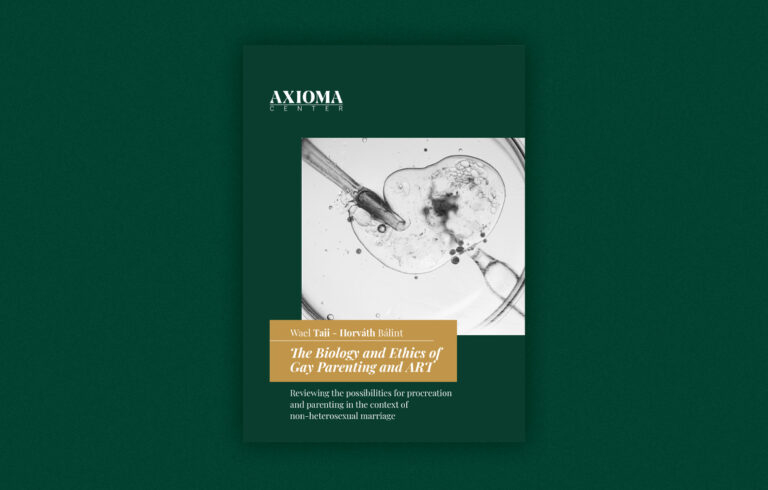
The Biology and Ethics of Gay Parenting and ART
What does the legalization of same-sex marriage require from lawmakers once parental rights are extended beyond heterosexual couples? This research paper examines the psychological, biological, legal, and ethical implications of same-sex parenting, with particular attention to adoption and assisted reproductive technologies.
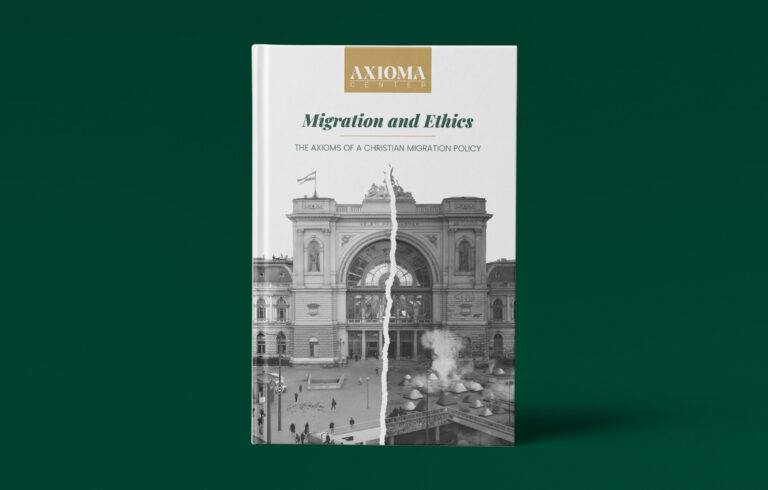
Migration and Ethics – The Axioms of a Christian Migration Policy
How should historically Christian nations respond to the challenges of mass migration in an increasingly unstable and interconnected world? This white paper offers analysis guided by Christian principles and practical, ethically grounded solutions that uphold human dignity, the common good, and thriving communities.
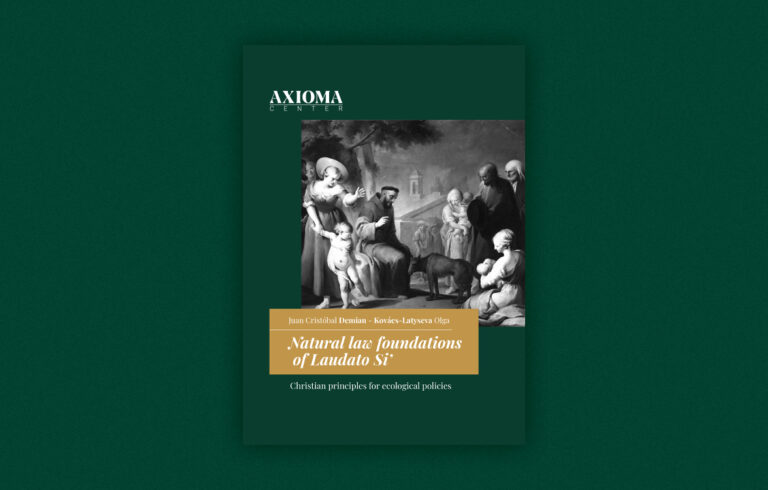
Natural Law Foundations of Laudato Si’ – Christian Principles for Ecological Policies
How should Christians care for creation without losing their theological foundations? This research paper reclaims Laudato Si’ through natural law, imago Dei, and Christian stewardship, offering a faithful alternative to both ecological reductionism and ideological environmentalism.